
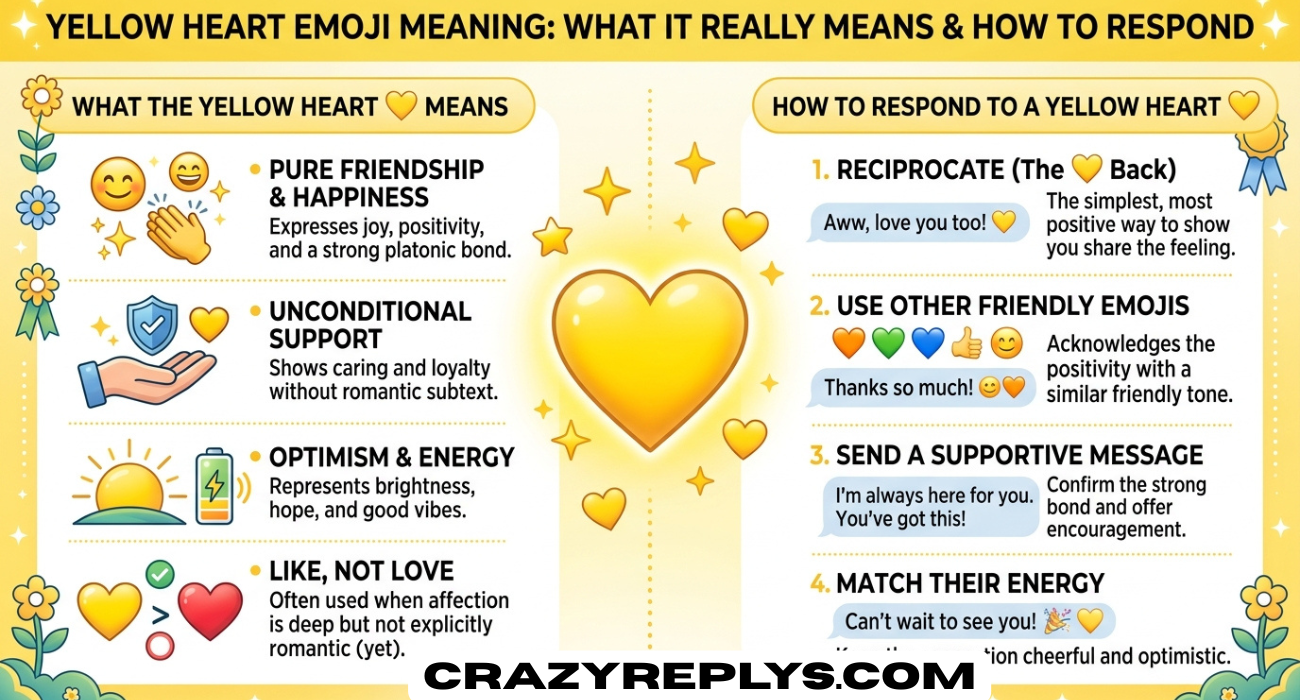
Yellow Heart Emoji Meaning: What It Really Means and How to Respond
The Yellow Heart Emoji shows friendship, care, and positive feelings in digital messages. It helps people express kindness in a simple way. Most users do not use it for romantic love. Instead, they use it to share warm and friendly emotions in chats and social media conversations.
You often see the Yellow Heart Emoji in daily texting and online posts. It catches attention because it feels bright, soft, and happy. Many people stop and wonder what it really means when someone sends it. It creates curiosity because it looks emotional but not too serious or romantic.
The Yellow Heart Emoji plays an important role in modern communication. People use it with friends, family, and even coworkers. It helps messages feel more human and friendly. This emoji supports positive communication and makes digital conversations feel more natural and warm.
| Heart Emoji | Common Meaning | Emotional Intensity |
| 💛 Yellow Heart | Friendship, positivity, support | Low to Medium |
| ❤️ Red Heart | Romance, deep love | High |
| 💙 Blue Heart | Trust, loyalty | Medium |
| 💜 Purple Heart | Admiration, care | Medium |
| 🧡 Orange Heart | Warm affection | Medium |
The Symbolism of the Yellow Heart Emoji
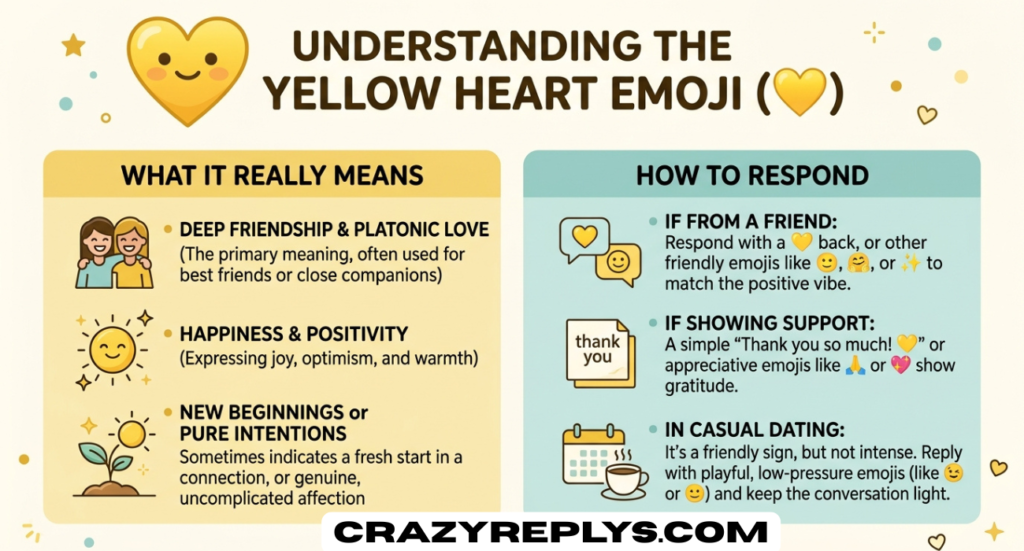
The yellow heart emoji meaning is deeply connected to happiness, optimism, and emotional warmth. Yellow is often associated with sunshine, joy, and bright moments. Because of these positive associations, the emoji has become a popular way to express kindness without creating romantic expectations. Many people use the emoji when they want to show appreciation while maintaining a comfortable emotional distance. The symbol works well across different conversations because it feels welcoming and sincere.
Another reason this emoji remains popular is its flexibility. Whether someone is celebrating good news, encouraging a friend, or expressing gratitude, the yellow heart fits naturally into the conversation. The emoji carries a positive emoji meaning that resonates with people of all ages. Its friendly appearance makes it one of the most widely accepted heart symbols in online communication, helping create stronger and more meaningful connections.
Read Also : Moon Current Phase Emoji: How to Match Today’s Real Moon Phase With the Right Emoji
Friendship and Positivity
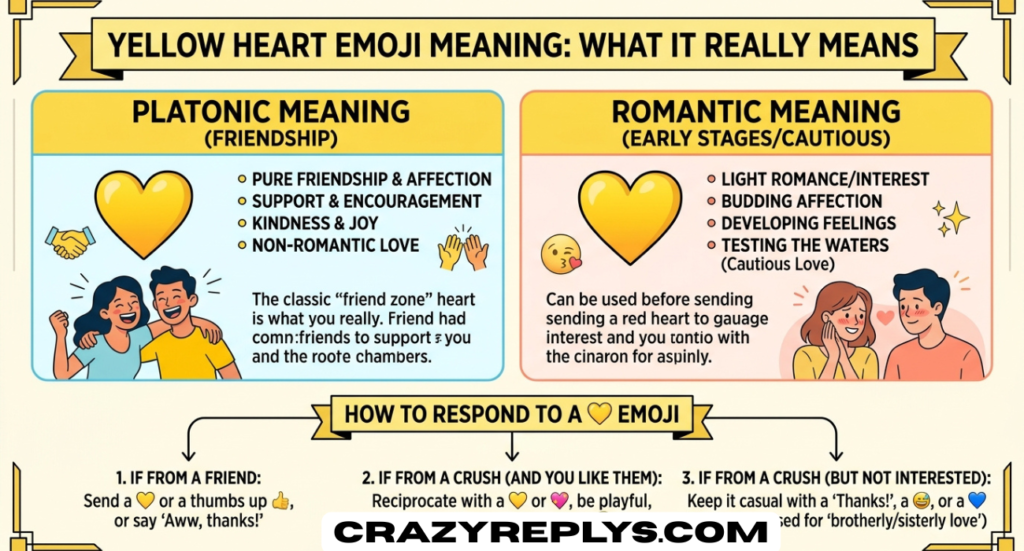
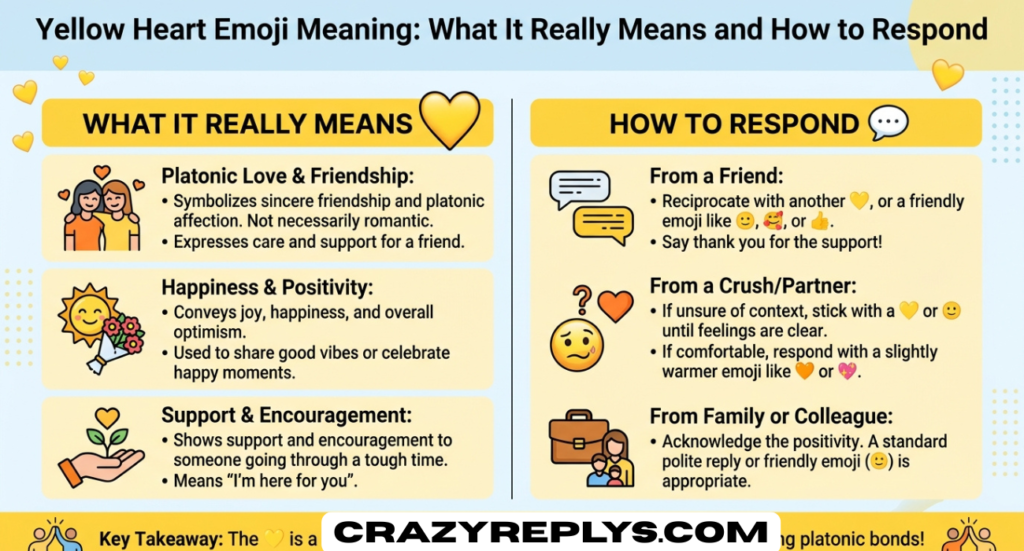
At its core, the yellow heart represents friendship and positivity. It acts as a digital reminder that someone values and appreciates another person. Many users see it as the ultimate friendship heart emoji because it expresses affection without introducing romantic pressure. When friends exchange yellow hearts, they often reinforce trust, loyalty, and emotional support within the relationship.
The emoji also serves as one of the most recognizable cheerful emoji symbols available today. It brightens conversations and creates an inviting atmosphere. Whether someone sends encouragement before an important event or celebrates a friend’s success, the yellow heart delivers a message of optimism. These qualities make it one of the strongest examples of a warm message emoji in modern texting culture.
A Symbol of Pure Intent
One of the reasons people appreciate the yellow heart is its reputation as a symbol of pure intent. Unlike more emotionally intense heart emojis, the yellow heart communicates affection in a gentle and uncomplicated way. It allows people to express care without creating confusion or unrealistic expectations. Many individuals prefer using it when they want their message to feel genuine and respectful.
The yellow heart often functions as a non-romantic heart emoji because it focuses on kindness rather than passion. Friends, relatives, coworkers, and acquaintances frequently use it to maintain positive relationships. In many situations, the emoji becomes a safe choice because it communicates emotional warmth while preserving healthy boundaries. This balance explains why it continues to grow in popularity across texting platforms and social media channels.
Cultural Perceptions
Different cultures sometimes interpret emojis in unique ways. Although the yellow heart emoji meaning generally remains positive, local customs and communication habits can influence how people understand it. In many Western countries, the emoji is strongly associated with friendship, happiness, and appreciation. Users often send it to celebrate milestones, acknowledge support, or simply brighten someone’s day.
Cultural differences become more noticeable when examining broader patterns of digital behavior. Younger generations may use the yellow heart casually in everyday conversations while older users often reserve it for meaningful exchanges. Despite these variations, the emoji consistently communicates goodwill. Its universal connection to brightness and optimism helps people from diverse backgrounds understand its message.
Real-World Examples: How People Use the Yellow Heart
The best way to understand the yellow heart relationship meaning is to look at real-life situations. In everyday conversations, people use the emoji to express gratitude, encouragement, and emotional support. A student might send it to a classmate who helped with a project. A friend might use it after receiving advice during a difficult moment. These interactions highlight the emoji’s role as a symbol of supportive communication.
Social media platforms have expanded the emoji’s popularity even further. Users frequently include yellow hearts in captions, comments, and reactions. The symbol creates a friendly atmosphere that encourages positive engagement. As a result, the yellow heart has become one of the most recognizable examples of social communication patterns in modern online culture.
| Situation | What the Yellow Heart Usually Means |
| Friend Messages | Appreciation and support |
| Family Chats | Caring and warmth |
| Social Media Comments | Encouragement |
| Workplace Communication | Professional friendliness |
| Group Chats | Positive group energy |
How to Respond to a Yellow Heart Emoji
Understanding how to respond to a yellow heart emoji depends heavily on context. The relationship between you and the sender often provides the clearest clues. In most cases, matching the sender’s tone creates the most natural response. If someone sends a yellow heart alongside a friendly message, returning the same emoji usually works perfectly.
The goal is to recognize the emotional tone behind the message. Effective friendly emoji responses often mirror the warmth and positivity expressed by the sender. By paying attention to surrounding text and previous interactions, you can avoid misunderstandings and create smoother conversations. This approach reflects good texting etiquette with emojis and strengthens communication overall.
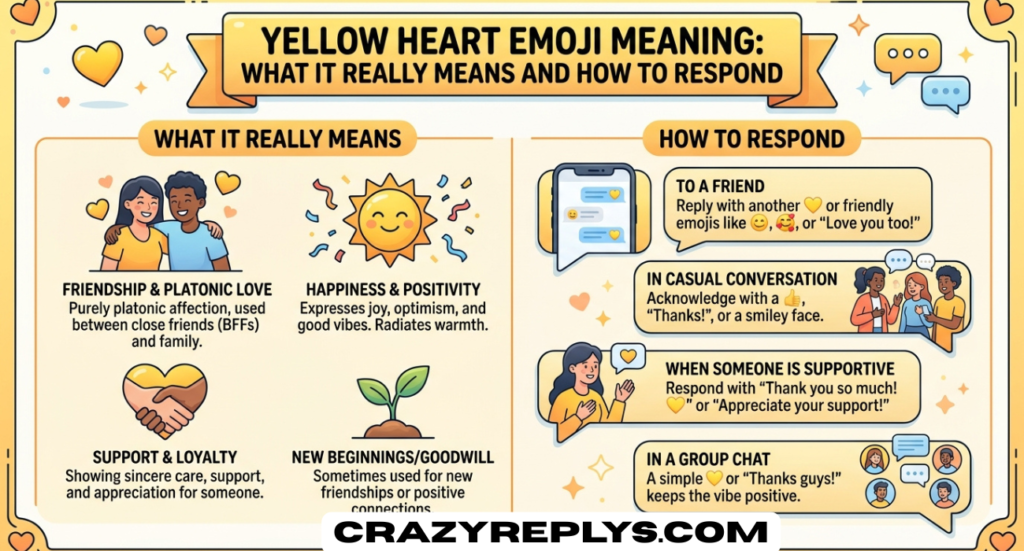
1. If It’s From a Friend
Receiving a yellow heart from a friend usually indicates appreciation, encouragement, or affection. Friends often exchange yellow hearts when celebrating achievements, offering support, or sharing happy moments. The emoji reinforces emotional bonds while keeping the interaction relaxed and comfortable. Because friendship naturally involves trust and familiarity, the symbol fits perfectly within these relationships.
A thoughtful yellow heart emoji response can be simple and effective. Sending another yellow heart, a smiling emoji, or a friendly message helps maintain the same positive energy. This approach supports a healthy friendly connection and reinforces the emotional value of the friendship. Most importantly, it keeps the conversation genuine and easygoing.
If It’s From a Romantic Interest
A yellow heart from a crush can feel more complicated because people often wonder whether the message contains hidden feelings. In some situations, the emoji may simply represent friendship and comfort. In others, it may signal growing affection that has not yet become romantic. The surrounding conversation usually provides valuable clues.
Understanding the yellow heart flirting meaning requires examining the broader communication pattern. If the sender regularly uses affectionate language, responds quickly, and includes other emotional signals, the yellow heart may carry deeper significance. However, context remains critical. A single emoji rarely provides enough evidence to determine romantic intentions on its own.
If It’s From Family or Colleagues
Family members often use the yellow heart to express love, appreciation, and encouragement. Unlike romantic hearts, the emoji feels comfortable in family settings because it emphasizes care without introducing unnecessary emotional complexity. The symbol works especially well when relatives want to celebrate achievements or offer support during challenging times.
The yellow heart from coworkers often appears during workplace celebrations, birthdays, team accomplishments, or congratulatory messages. In professional environments, the emoji supports positive relationships while maintaining appropriate boundaries. This form of professional emoji use reflects growing acceptance of emojis within modern workplace communication and digital collaboration.
If It’s From Someone You Like
Seeing a yellow heart from someone you like can instantly make you wonder about their feelings. The emoji feels warm, welcoming, and personal. Still, the yellow heart emoji meaning is not always romantic. Many people use it naturally because they enjoy maintaining positive conversations and creating a friendly atmosphere. Before assuming the sender has romantic feelings, it helps to look at the overall conversation. Notice how often they message you, whether they initiate contact, and how they express themselves through words and emojis.
The yellow heart relationship meaning often depends on patterns rather than individual messages. If someone consistently sends thoughtful texts, remembers important details, and includes affectionate symbols alongside yellow hearts, there may be deeper emotions involved. These romantic interest signals can reveal more than the emoji itself. On the other hand, some people use yellow hearts with everyone. Looking at the complete communication style provides a more accurate understanding than focusing on a single emoji.
| Sign | Possible Meaning |
| Frequent Yellow Hearts | Strong comfort and trust |
| Daily Conversations | Growing emotional connection |
| Personal Questions | Genuine interest |
| Fast Replies | High engagement |
| Multiple Affectionate Emojis | Potential romantic interest |
If You Want to Keep the Vibe Friendly
Sometimes you may appreciate someone while wanting to maintain clear boundaries. In these situations, the yellow heart becomes extremely useful. The emoji supports non-flirty communication and encourages positive interactions without creating confusion. Sending a yellow heart back often communicates appreciation while preserving a comfortable emotional distance. This balance makes the symbol one of the safest options in modern texting.
Many people use the emoji to strengthen friendships and avoid mixed signals. The yellow heart friendship symbol helps establish a clear tone based on kindness and support. Pairing the emoji with encouraging words creates a stronger message. This approach supports supportive friendship, healthy communication, and long-term trust. It also reduces misunderstandings that sometimes occur when people interpret emojis differently.
Psychology Behind Emoji Interpretation
Understanding emoji behavior starts with understanding human psychology. The brain processes emojis as visual representations of emotions. When people see a smiling face, heart, or yellow heart, they often react emotionally before they consciously analyze the symbol. This process explains why emojis have become powerful tools for emotional expression in digital conversations. The emoji psychology behind heart symbols reveals how visual cues help people feel connected even when communicating through screens.
Researchers often describe emojis as emotional shortcuts because they allow people to communicate feelings quickly and efficiently. In face-to-face conversations, people rely on tone of voice, facial expressions, and body language. Digital messages lack these elements. As a result, emojis function as a form of digital body language. The yellow heart helps clarify the text message tone and reduces uncertainty in written communication. This role makes emojis essential components of modern online interaction.
The Science Behind Emoji Communication
Scientists studying communication have discovered that visual symbols activate emotional responses more effectively than plain text. A short message accompanied by a yellow heart often feels warmer than the same message without an emoji. These subtle emotional cues help strengthen relationships and improve understanding between people. This process demonstrates the growing importance of emoji communication cues in digital environments.
The yellow heart contributes significantly to emoji symbolism because it communicates positive emotions with remarkable simplicity. Users instantly recognize the symbol’s connection to kindness and happiness. As a result, the emoji has become one of the most trusted tools for maintaining healthy online relationships. Its widespread use highlights the powerful relationship between visual symbols and emotional communication.
SEO Insights: Why People Search for Emoji Meanings
Search interest in emoji meanings continues to grow because digital communication has become a major part of everyday life. People constantly encounter new symbols and wonder about their intended meaning. The yellow heart meaning in text generates significant curiosity because users often struggle to determine whether the emoji signals friendship, affection, appreciation, or romance. This uncertainty drives millions of searches each year.
Many users search for explanations because they want to avoid mistakes in personal relationships. Questions about emoji meanings in relationships have become increasingly common as texting replaces many face-to-face conversations. People want clarity. They want to understand whether a message carries romantic intentions or simply reflects friendship. The yellow heart sits directly at the center of this curiosity because it exists between friendship and romance.
Most Common Questions People Ask
The popularity of emoji-related searches reflects broader changes in communication habits. Modern users rely heavily on texting symbols and meanings to interpret conversations. Since people cannot hear voice inflection or observe facial expressions, they often search online for guidance. The yellow heart remains one of the most frequently researched symbols because its meaning depends heavily on context.
Another reason for growing search interest involves evolving online messaging behavior. Social media platforms, messaging apps, and workplace collaboration tools encourage frequent emoji use. As emojis become more common, users naturally seek better understanding. This trend has transformed emoji interpretation into an important part of modern communication literacy.
| Search Query | User Intent |
| Yellow heart emoji meaning | Understand emotional meaning |
| What does a yellow heart mean | Clarify relationship context |
| Is yellow heart romantic | Determine romantic intent |
| Yellow heart from a crush | Understand attraction signals |
| How to respond to yellow heart | Improve communication |
Evergreen Tips for Responding
Responding effectively to a yellow heart starts with understanding context. Relationships matter more than emojis. Before replying, consider who sent the message and why. A close friend, coworker, family member, or romantic interest may all use the same emoji differently. Paying attention to the surrounding conversation helps uncover the intended meaning. This practice improves text interpretation and reduces communication mistakes.
One of the most effective strategies involves matching the sender’s emotional energy. If someone sends a warm and supportive message, responding with similar positivity usually works well. These positive interactions strengthen relationships and create more meaningful conversations. The yellow heart thrives in environments built on trust, encouragement, and mutual respect. Keeping your response authentic often produces the best results.
Quick Dos and Don’ts
Good emoji communication depends on consistency. When your words and emojis align, people can understand your intentions more easily. This principle applies whether you are communicating with friends, relatives, coworkers, or romantic interests. Maintaining a clear communication style helps prevent misunderstandings and supports stronger relationships over time.
At the same time, it is important not to overanalyze every emoji. While symbols provide useful clues, they represent only one part of the conversation. Looking at overall behavior, message frequency, and emotional tone offers a more complete picture. This balanced approach improves relationship communication and helps people navigate digital conversations with greater confidence.
| Do | Why It Helps |
| Match the sender’s energy | Creates natural conversation flow |
| Consider context | Improves understanding |
| Stay positive | Supports healthy communication |
| Use clear language | Reduces confusion |
| Be authentic | Builds trust |
| Don’t | Why It Can Cause Problems |
| Assume romance immediately | May create misunderstandings |
| Ignore conversation history | Misses important context |
| Overthink one emoji | Leads to inaccurate conclusions |
| Send mixed signals | Creates confusion |
| Rely only on emojis | Weakens communication clarity |
Common Yellow Heart Emoji Misconceptions
Many people mistakenly believe the yellow heart emoji automatically means friendship and nothing more. While friendship remains its most common meaning, real communication is far more nuanced. Context shapes interpretation. A yellow heart exchanged between lifelong friends may communicate something very different from a yellow heart exchanged between two people exploring a romantic connection. Understanding these differences helps prevent confusion.
Another common misunderstanding involves the idea that the yellow heart always indicates the friend zone meaning. In reality, the emoji can represent many emotions including appreciation, trust, gratitude, affection, and emotional comfort. The symbol works best when viewed alongside other emotional cues, conversation patterns, and relationship dynamics. This broader perspective allows for more accurate interpretation and healthier communication.
“A yellow heart rarely tells the whole story by itself. The surrounding conversation usually reveals the true meaning.”
The continued popularity of the yellow heart demonstrates its unique ability to balance warmth, friendliness, and emotional sincerity. Whether used as a platonic affection emoji, a sign of friendly love, a symbol of gratitude expression, or part of broader social interaction, the yellow heart remains one of the most versatile emojis in modern communication. Its role within casual texting, social media comments, online communication, and workplace communication ensures that it will remain an important symbol for years to come. Understanding its meaning allows people to navigate digital conversations more confidently while building stronger and more meaningful connections.
Yellow Heart Emoji vs Other Heart Emojis
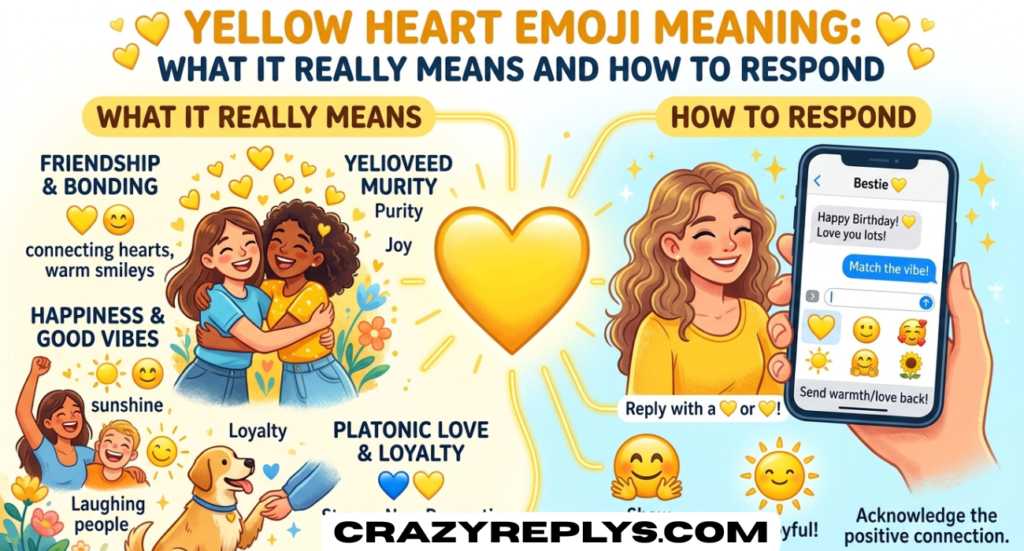
The yellow heart emoji stands apart from other heart emojis because it focuses on warmth, friendship, and positivity. While red hearts often suggest romance and pink hearts may imply affection, the yellow heart creates a more comfortable emotional space. Many users choose it when they want to express appreciation without adding romantic pressure to the conversation.
Comparing heart emojis helps people understand the true yellow heart emoji meaning. Each color carries a unique emotional message. The yellow heart is often viewed as the safest option because it supports friendship and encouragement. This distinction makes it one of the most widely used symbols in modern digital communication signs and everyday messaging.
What the Yellow Heart Emoji Means on Social Media
Social media platforms have expanded the use of the yellow heart emoji far beyond simple texting. Users often include it in captions, comments, and story replies to show support and appreciation. The emoji creates a welcoming atmosphere and encourages positive engagement among followers, friends, and online communities.
The yellow heart meaning in text can shift slightly on social media because interactions often involve larger audiences. In many cases, it acts as a public display of encouragement rather than a private emotional signal. This use strengthens positive conversations and helps users build stronger online relationships through simple but meaningful interactions.
Why the Yellow Heart Emoji Feels So Genuine
One reason people love the yellow heart emoji is its authentic emotional tone. Unlike some emojis that carry multiple interpretations, the yellow heart usually communicates kindness and sincerity. It feels natural, honest, and easy to understand, making it a preferred choice for many digital conversations.
The emoji also reflects pure intent, which contributes to its popularity. People often send it when expressing gratitude, support, or friendship. Because it lacks strong romantic undertones, it helps create trust and emotional comfort. This quality makes the yellow heart a valuable symbol in healthy and respectful communication.
The Role of Yellow Heart Emoji in Modern Texting
Text messaging has changed how people express emotions. The yellow heart in texting helps bridge the gap between plain words and emotional expression. By adding warmth and friendliness to messages, it helps conversations feel more personal and engaging without becoming overly emotional.
Modern communication often relies on visual symbols to clarify meaning. The yellow heart serves as one of the most effective texting symbols and meanings available today. It provides emotional context quickly and clearly, helping people understand intentions while reducing misunderstandings in everyday conversations.
Signs Someone Uses the Yellow Heart Emoji Frequently
Some people use the yellow heart occasionally while others include it in nearly every conversation. Frequent use often reflects a naturally warm personality and a desire to maintain positive relationships. These users typically value kindness, support, and emotional connection within their social interactions.
Regular use does not always indicate romantic feelings. Instead, it often highlights a person’s communication habits and emotional style. Understanding these social communication patterns can help prevent confusion. Looking at the sender’s overall behavior provides a much clearer picture than focusing on a single emoji alone.
How the Yellow Heart Emoji Strengthens Relationships
Strong relationships depend on trust, understanding, and consistent communication. The yellow heart friendship symbol supports these qualities by helping people express appreciation and care in simple ways. Even a small emoji can reinforce emotional bonds and remind someone they are valued.
The emoji also encourages healthier relationship communication by adding emotional clarity to messages. Whether used between friends, family members, or coworkers, it helps create a positive atmosphere. This supportive role explains why the yellow heart remains one of the most effective symbols in digital communication.
Common Situations Where People Send a Yellow Heart
People send yellow hearts in many different situations. They may use it to celebrate achievements, thank someone for support, or simply brighten another person’s day. These everyday interactions demonstrate the flexibility and emotional value of the emoji across multiple communication settings.
The symbol works especially well during moments of encouragement and appreciation. Because it carries a strong positive emoji meaning, it fits naturally into conversations focused on support and connection. This adaptability makes the yellow heart useful in both personal and professional environments.
Understanding Yellow Heart Emoji in Relationships
The yellow heart relationship meaning often depends on the nature of the relationship itself. Friends may use it to express loyalty and support while family members may use it to communicate affection and care. Context remains the most important factor when interpreting the emoji.
Romantic relationships can add another layer of complexity. Sometimes the yellow heart reflects growing affection while other times it simply represents comfort and trust. Understanding the broader conversation helps reveal whether the emoji signals friendship, attraction, or emotional appreciation.
Why Younger Generations Love the Yellow Heart Emoji
Younger users have embraced the yellow heart because it matches their preference for casual and positive communication. The emoji allows them to express feelings without making conversations feel overly serious. Its bright appearance also aligns with modern social media culture.
The symbol fits perfectly within today’s fast-paced messaging environment. It communicates warmth instantly and supports friendly interactions across multiple platforms. As a result, the yellow heart has become a popular part of modern online messaging behavior and everyday digital communication.
The Future of Yellow Heart Emoji Communication
As communication continues to evolve, emojis will likely play an even greater role in daily interactions. The yellow heart emoji meaning has already become deeply embedded in digital culture. Its simplicity and emotional clarity make it highly adaptable to future communication trends.
New platforms and technologies may change how people interact, yet the need for emotional connection will remain. The yellow heart satisfies this need by providing a quick and meaningful way to express support, appreciation, and friendship. Its enduring appeal ensures its place in the future of online communication.
FAQs
What does the Yellow Heart Emoji mean in a text message?
The yellow heart emoji meaning usually represents friendship, happiness, appreciation, and emotional support. It is commonly used to express care without strong romantic intentions.
Is the Yellow Heart Emoji a sign of flirting?
Not always. The yellow heart flirting meaning depends on the context, conversation tone, and relationship between the people involved. Most often, it symbolizes friendliness rather than romance.
How should I respond to a Yellow Heart Emoji?
A simple yellow heart, smiley emoji, or kind message works well as a yellow heart emoji response. Matching the sender’s energy is usually the best approach.
What’s the difference between a Yellow Heart and a Red Heart Emoji?
The yellow heart emoji typically represents friendship and positivity while the red heart is more strongly associated with romantic love, passion, and deeper emotional affection.
Conclusion
The Yellow Heart Emoji is a simple symbol that carries a positive and friendly message. People often use it to show kindness, appreciation, support, and friendship. Unlike some other heart emojis, it usually does not create strong romantic feelings. Instead, it helps people build warm and comfortable connections. In text messages, social media posts, and online chats, the yellow heart adds a touch of happiness and care. Its bright color also reflects joy, optimism, and encouragement, which makes it one of the most popular heart emojis today.
Understanding the Yellow Heart Emoji can help you communicate more clearly and confidently. The meaning often depends on the situation and the relationship between the people involved. When you pay attention to the conversation, you can better understand the message behind the emoji. Whether it comes from a friend, family member, coworker, or someone special, the yellow heart usually shares positive feelings. It remains a powerful symbol of friendship, trust, support, and genuine human connection in modern digital communication.