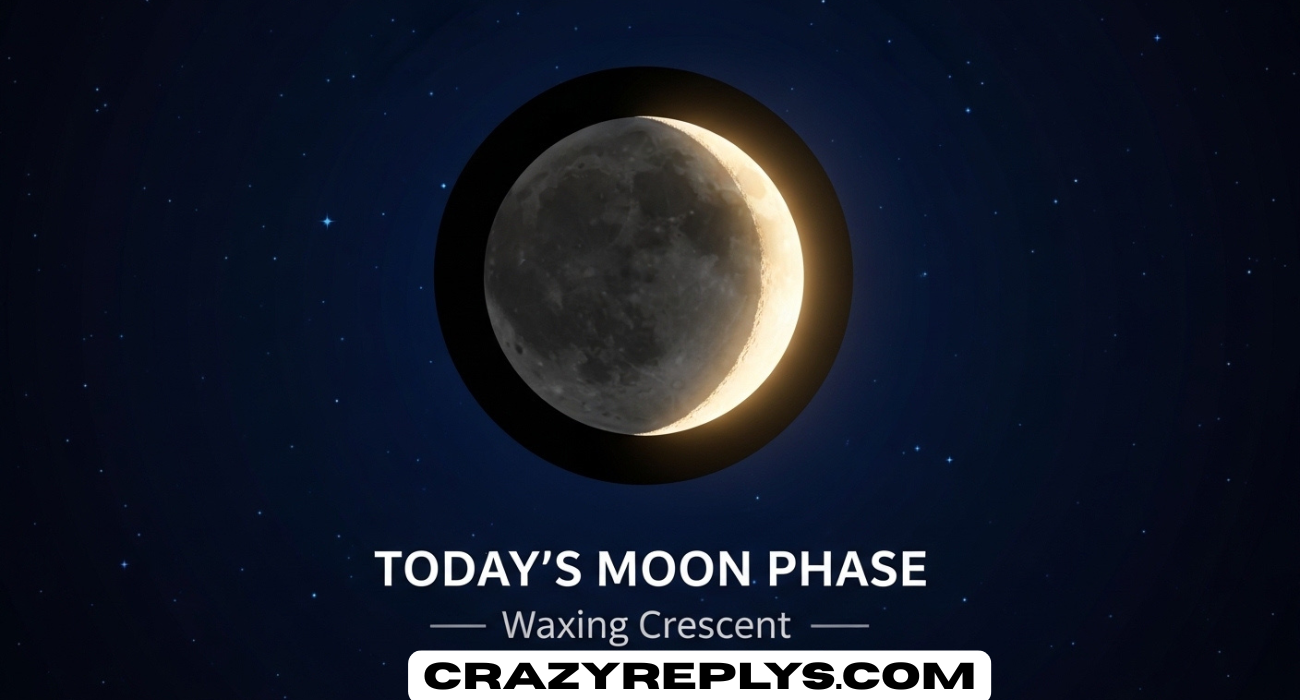
Moon Current Phase Emoji: How to Match Today’s Real Moon Phase With the Right Emoji
The Moon Current Phase Emoji shows the emoji that matches the moon’s real appearance in the sky right now. It represents the exact stage of the lunar cycle in a simple digital form. People use it to understand and share the moon phase in everyday communication.
The night sky changes slowly but constantly, and each night brings a new view of the moon. Sometimes you see a thin curve, and other times you see a full bright circle. This natural change makes the Moon Current Phase Emoji useful and interesting for many people.
The Moon Current Phase Emoji helps connect real sky observation with digital messages and social media posts. It allows people to match what they see above with the correct symbol. Many users enjoy using it for learning, chatting, and tracking moon phases.
| Moon Emoji | Moon Phase |
| 🌑 | new moon emoji |
| 🌒 | waxing crescent moon |
| 🌓 | first quarter moon |
| 🌔 | waxing gibbous moon |
| 🌕 | full moon emoji |
| 🌖 | Waning Gibbous |
| 🌗 | last quarter moon |
| 🌘 | waning crescent moon |
Understanding Moon Emojis: More Than Just Cute Icons
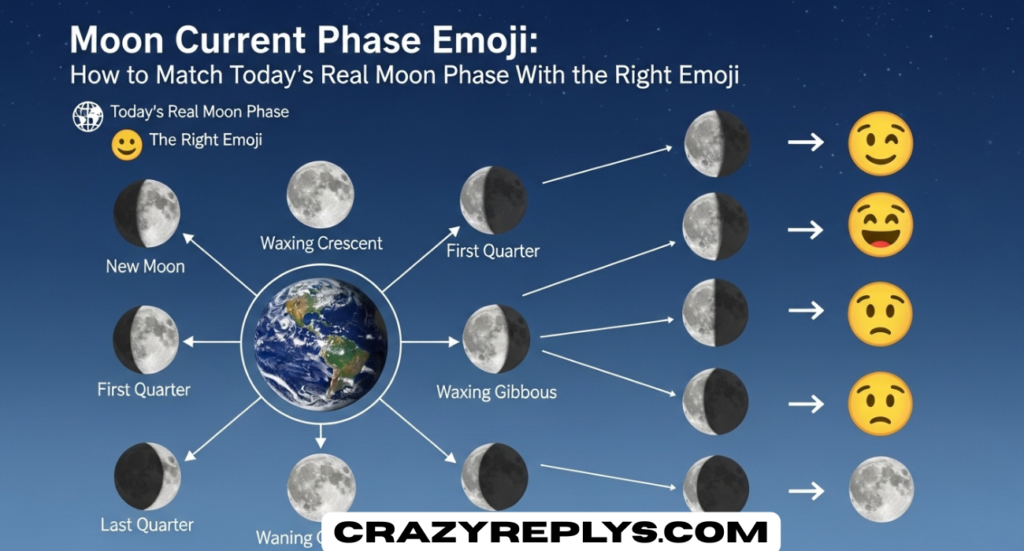
Moon emojis do much more than decorate text messages. Each emoji reflects a real stage in the moon’s monthly journey around Earth. The moon current phase emoji people search for often corresponds to a specific point in the lunar month. The moon begins with the new moon emoji, slowly grows into a waxing crescent moon, reaches the first quarter moon, advances into a waxing gibbous moon, becomes a bright full moon emoji, and then gradually shrinks again. These symbols create a visual language that helps people understand lunar changes without needing advanced astronomical knowledge.
What makes moon emojis especially interesting is their universal appeal. Students use them while learning about space. Social media creators add them to posts for aesthetic value. Astronomy fans rely on a moon emoji guide to identify different phases. Even casual users often refer to a moon emoji chart when they want to match the real moon outside their window. Because the moon has inspired cultures for thousands of years, these small digital icons carry meanings connected to science, storytelling, traditions, and human curiosity.
Do Moon Emojis Match the Real Moon Phase?
Many people assume their phone automatically displays the current phase of the moon emoji, but that is not how emojis work. Moon emojis remain fixed images that never update based on the actual sky. If you send a full moon emoji today, it will still appear as a full moon next week even if the real moon has moved into another phase. This difference often surprises users who expect their devices to reflect real-time lunar conditions.
The gap between emojis and reality explains why moon enthusiasts often compare emoji symbols with the actual moon. A person may see a waning crescent moon outdoors while continuing to use a full moon emoji in a message. Understanding this distinction helps improve moon phase matching and creates more accurate posts about the night sky. Once you learn that emojis are static symbols rather than live astronomical indicators, it becomes easier to appreciate them as visual representations instead of real-time tracking tools.
Real-Time Moon Phases: How to Check the Actual Lunar Phase
Fortunately, modern technology makes it easy to discover the current moon phase at any moment. Many people use a moon phase calendar, a moon phase app, or a dedicated lunar phase tracker to monitor changes in the sky. These tools provide detailed information about moon illumination percentage, visibility, rise and set times, and future lunar events. They also help users determine which emoji most closely matches the moon above them.
Reliable sources such as NASA moon phase data and the timeanddate moon tracker provide highly accurate astronomical data. A quality moon phase calendar app, moon phase app for iPhone, or moon phase app for Android can instantly display the moon phase today and explain the moon’s position within the larger lunar calendar. These resources transform complex calculations into simple visual displays, allowing anyone to track real-time moon phases without needing formal training in astronomy.
Best Tools for Moon Phase Tracking
| Tool Type | Main Purpose |
| moon tracker | Tracks daily lunar movement |
| moon phase calendar | Shows future and past phases |
| lunar phase tracker | Provides phase percentages |
| moon phase app | Mobile access to moon data |
| timeanddate moon tracker | Real-time lunar updates |
| NASA moon phase data | Scientific lunar calculations |
Why This Matters More Than You Think
At first glance, choosing the correct current phase of the moon emoji may seem unimportant. However, details often make communication more meaningful. Imagine posting a beautiful nighttime photo alongside a moon emoji that perfectly matches the real sky. That small touch creates authenticity and demonstrates attention to detail. Many astronomy enthusiasts, photographers, educators, and skywatchers enjoy aligning their content with the actual lunar conditions.
Beyond communication, moon tracking strengthens people’s connection with nature. In a world filled with screens and notifications, observing the moon encourages awareness of natural cycles. Following the moon phase today helps people notice patterns in the sky that often go unnoticed. Through regular moon observation, individuals develop a deeper appreciation for lunar astronomy, changing seasons, and the predictable rhythm of Earth’s celestial neighbor.
Expert Insight
Astronomers view moon phases as a direct result of sunlight reflecting from different portions of the moon’s surface. As the moon orbits Earth, observers see changing amounts of illuminated surface. This process creates the recognizable lunar stages represented by moon emojis. Scientific organizations collect extensive lunar information to predict these phases years in advance with remarkable accuracy.
Developers who design emoji systems often study these lunar appearances carefully. While artistic differences exist, emoji creators generally base their designs on real moon phases. This connection between science and technology allows users to explore lunar concepts through simple symbols. When combined with moon cycle tracking, educational resources, and modern apps, moon emojis become more than decorative icons. They become accessible tools for learning about the universe.
How to Match the Current Moon Phase to the Right Emoji
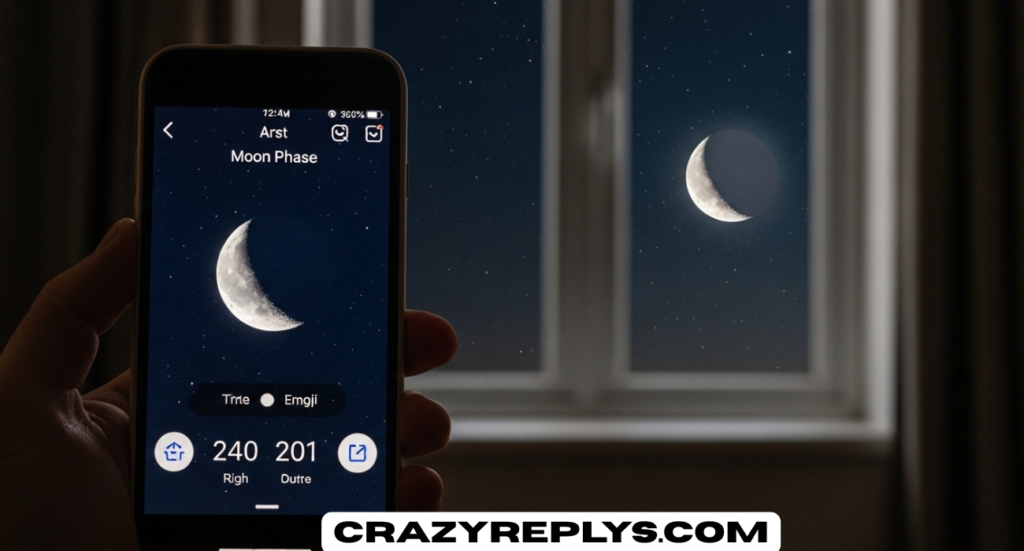
Finding the correct current phase of the moon emoji becomes simple when you follow a few easy steps. First, check a trusted moon phase app, moon phase calendar, or moon tracker to identify the current moon phase. Next, compare the moon’s shape with a reliable moon emoji chart. If only a thin illuminated edge appears, you may be looking at a waxing crescent moon or a waning crescent moon. If half of the moon is visible, it may be the first quarter moon or the last quarter moon. As the illuminated area grows larger than half, the moon enters the waxing gibbous moon stage before becoming a bright full moon emoji.
Understanding moon growth and decline helps improve moon phase matching. A waxing moon becomes brighter each night while a waning moon gradually loses illumination. This simple observation can help you select the most accurate emoji. Many enthusiasts use moon shape comparison techniques during night sky observation because visual clues often reveal the correct phase quickly. With practice, matching the moon in the sky to its emoji counterpart becomes almost second nature.
Quick Moon Emoji Matching Guide
| Real Moon Phase | Matching Emoji | Description |
| new moon emoji | 🌑 | Moon not visible |
| waxing crescent moon | 🌒 | Thin growing crescent |
| first quarter moon | 🌓 | Half illuminated |
| waxing gibbous moon | 🌔 | Mostly illuminated |
| full moon emoji | 🌕 | Fully illuminated |
| Waning Gibbous | 🌖 | Slowly decreasing light |
| last quarter moon | 🌗 | Half illuminated while shrinking |
| waning crescent moon | 🌘 | Thin fading crescent |
Emoji Use in Astrology and Rituals
Moon emojis play a major role in digital astrology and modern spiritual communities. Many people believe the moon influences emotions, intentions, and personal growth. As a result, they often use the current phase of the moon emoji when sharing astrology posts, meditation updates, or moon-related reflections. A new moon emoji often symbolizes fresh beginnings, goal setting, and new opportunities. By contrast, the full moon emoji usually represents completion, clarity, achievement, and heightened awareness.
The connection between moon phases and spiritual rituals continues to grow across social media platforms. Many users associate specific phases with unique forms of cosmic energy. The waxing gibbous meaning often relates to progress and preparation, while the waning crescent meaning is commonly linked to rest, reflection, and release. Although scientific evidence does not support every spiritual interpretation, the symbolic value of moon phases remains powerful for millions of people who use lunar imagery to mark important moments in their lives.
Moon Emojis and Platform Differences
One surprising aspect of moon emojis is that they do not look exactly the same on every device. The moon emoji on iPhone often appears more detailed and realistic, featuring subtle shading and smoother textures. In contrast, the Android moon emoji typically uses a cleaner and flatter design. These visual differences may seem small, yet they can noticeably change how a moon emoji appears when shared across devices.
Other platforms add their own artistic style. The Samsung moon emoji uses different color tones and crescent shapes, while the Windows moon emoji often appears simpler and more cartoon-like. These moon emoji differences result from each company creating custom artwork while following the same Unicode standards. Even though the designs vary, the underlying meanings remain consistent. Whether someone views a moon emoji on a smartphone, tablet, laptop, or social media platform, the symbol still represents the same stage within the lunar cycle.
Moon Emoji Design Comparison
| Platform | Appearance Style |
| moon emoji on iPhone | Detailed and realistic |
| Android moon emoji | Flat and modern |
| Samsung moon emoji | Bold colors and unique shading |
| Windows moon emoji | Simplified design |
| Web Platforms | Varies by website and browser |
The increasing popularity of moon emojis reflects a larger fascination with the moon itself. People now have instant access to real-time moon phases, accurate moon phase calendar tracking, and advanced lunar information through mobile technology. A simple moon phase app for iPhone or moon phase app for Android can display moon illumination percentage, provide detailed lunar illumination reports, and explain the science behind changing moon appearances. These tools transform everyday phones into portable astronomy guides.
As interest in lunar astronomy continues to expand across the United States, more people are exploring moon visibility, studying lunar symbols, and following the real moon phase throughout the month. Educational resources, astronomy organizations, and digital tools now make moon cycle tracking easier than ever before. Whether your goal is scientific learning, social media accuracy, personal curiosity, or participation in digital astrology, understanding the current phase of the moon emoji helps connect the digital world with the remarkable celestial events happening above us every night.
Moon Current Phase Emoji and the Science Behind Lunar Changes
The current phase of the moon emoji becomes much more interesting when you understand the science behind it. The moon does not produce its own light. Instead, sunlight reflects from its surface. As the moon travels around Earth, different portions become visible to us. This process creates the familiar sequence of moon phases that people recognize through both astronomy and digital communication.
Scientists have studied the moon for centuries because it provides valuable clues about planetary motion and celestial mechanics. Modern technology allows experts to predict every phase years in advance. When people use a moon emoji, they are often representing a specific stage within this predictable pattern. Understanding the science behind the moon helps make each emoji feel more meaningful and connected to reality.
Why Americans Search for the Current Phase of the Moon Emoji
Interest in the current phase of the moon emoji continues to grow across the United States. Many users want to know which emoji accurately represents tonight’s sky before sharing social media updates or creating themed content. Others simply enjoy following lunar events and staying connected to natural cycles that often go unnoticed during busy daily routines.
Search trends also reveal increasing curiosity about astronomy and skywatching. More people now download moon tracking applications and visit astronomy websites to monitor lunar activity. The combination of technology, education, and digital communication has transformed moon emojis from simple symbols into useful visual references that help users understand and share real-world celestial events.
How the Lunar Cycle Influences Moon Emoji Selection
The moon follows a repeating pattern known as the lunar cycle, which lasts approximately twenty-nine and a half days. During this journey, the moon transitions through several recognizable phases. Each stage has a corresponding emoji that allows users to represent the moon’s appearance accurately within digital conversations and online content.
Understanding the lunar cycle helps users avoid common mistakes when selecting moon emojis. Someone who knows the difference between waxing and waning phases can quickly identify the correct symbol. This knowledge improves accuracy while adding educational value to everyday communication. It also creates a stronger connection between digital symbols and natural astronomical events.
Moon Current Phase Emoji in Social Media Culture
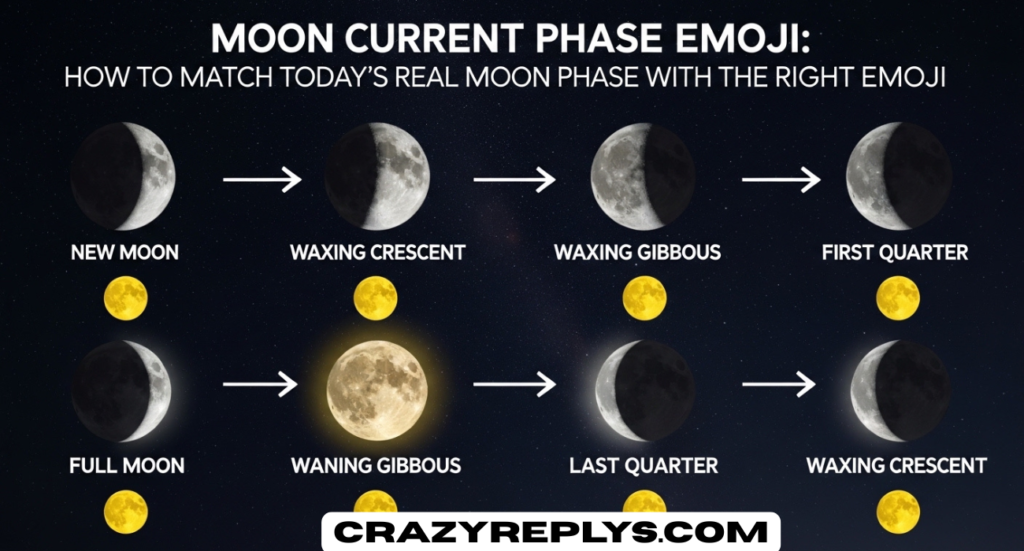
Social media platforms have transformed the way people use moon emojis. Users frequently include them in captions, stories, and creative content to enhance visual appeal. The current phase of the moon emoji often appears in posts about nighttime photography, seasonal events, and personal reflections that connect with the beauty of the evening sky.
Moon emojis also contribute to online trends centered around mindfulness and nature appreciation. Many creators use lunar symbols to establish mood and atmosphere within their content. As audiences become more interested in authenticity, matching an emoji to the actual moon phase adds a subtle detail that can improve engagement and strengthen audience trust.
The Relationship Between Moon Illumination and Emoji Accuracy
Moon illumination refers to the percentage of the moon’s visible surface that reflects sunlight toward Earth. This measurement changes continuously throughout the lunar month. Understanding illumination helps users select the emoji that most closely resembles the moon they observe in the sky at any given moment.
Many moon tracking applications display illumination percentages alongside phase names. These measurements provide a clearer picture of how the moon appears. By combining illumination data with visual observation, users can improve moon emoji accuracy and develop a deeper understanding of lunar behavior without requiring advanced astronomy knowledge.
How Moon Emojis Help Teach Astronomy
Teachers and educational websites often use moon emojis to introduce astronomy concepts in a simple and engaging way. Visual symbols help students recognize lunar phases more easily than technical diagrams alone. This approach makes learning accessible to younger audiences while encouraging curiosity about the night sky.
Because emojis already form part of everyday communication, they provide a familiar entry point into scientific topics. Students who learn phase names through emojis often develop stronger recognition skills. Over time, these small symbols can inspire greater interest in astronomy, space exploration, and the broader study of celestial phenomena.
Cultural Meanings Associated With Moon Emojis
Throughout history, cultures around the world have attached special meanings to the moon. Some traditions view the full moon as a symbol of abundance and celebration, while others associate the new moon with fresh beginnings and personal growth. These cultural interpretations continue to influence how people use moon emojis today.
Digital communication has expanded the reach of these symbolic meanings. People now incorporate moon emojis into messages, artwork, and social media content to express emotions and ideas. Although interpretations vary between cultures, the moon remains a powerful symbol that connects individuals through shared experiences and universal observations of the night sky.
How Weather Conditions Affect Moon Visibility
Even when you know the current lunar phase, weather conditions can dramatically affect visibility. Cloud cover, fog, humidity, and atmospheric pollution often obscure the moon from view. As a result, people may struggle to confirm whether their chosen moon emoji accurately reflects the real sky above them.
Moon tracking tools help solve this challenge by providing reliable lunar data regardless of local weather conditions. Users can verify the current phase through digital resources even when visibility is poor. This combination of technology and astronomy ensures that accurate moon information remains available throughout the year.
The Growing Popularity of Lunar Tracking Technology
Advancements in smartphone technology have made lunar tracking more accessible than ever before. Modern applications provide detailed information about moonrise times, illumination percentages, future phases, and upcoming celestial events. These features allow users to monitor lunar activity with remarkable precision from virtually any location.
As interest in astronomy continues to expand, developers keep introducing new tools that simplify moon observation. Interactive maps, augmented reality features, and personalized notifications make lunar tracking easier for beginners and experienced enthusiasts alike. This growing accessibility contributes to the increasing popularity of moon-related content and emoji usage.
Future Trends in Moon Current Phase Emoji Usage
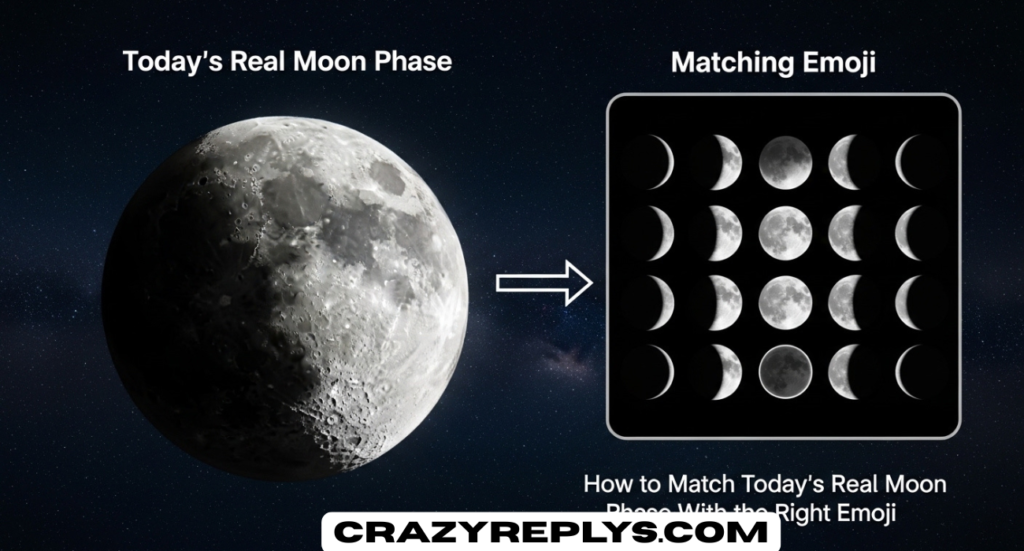
The future of the current phase of the moon emoji may include even greater integration with real-time astronomical data. As mobile technology evolves, developers could create smarter applications that automatically suggest the correct emoji based on a user’s location, time, and current lunar conditions.
Growing public interest in astronomy, space exploration, and scientific education will likely increase demand for accurate lunar content. Moon emojis already serve as a bridge between technology and nature. As awareness of celestial events continues to rise, these simple symbols may become even more important tools for communication, education, and digital storytelling.
FAQs
What is the Moon Current Phase Emoji?
The Moon Current Phase Emoji is the moon emoji that best matches the moon’s actual appearance in the sky today, based on the current stage of the lunar cycle.
Does the Moon Current Phase Emoji Change Automatically on My Phone?
No, moon emojis are static symbols. They do not update automatically to reflect the real moon phase, so you must choose the emoji that matches the current moon phase yourself.
How Can I Find the Correct Moon Current Phase Emoji for Tonight?
You can check a moon phase app, lunar calendar, or moon tracker to see today’s moon phase and then select the matching moon emoji.
Why Do Moon Emojis Look Different on iPhone and Android?
Apple, Google, Samsung, and Microsoft use different emoji designs. Although the appearance changes across devices, the moon phase meaning remains the same.
Conclusion
The Moon Current Phase Emoji helps people connect the digital world with the real night sky. Each moon emoji represents a different stage of the lunar cycle and makes it easier to understand how the moon changes throughout the month. With the help of moon trackers, lunar calendars, and moon phase apps, anyone can find the correct emoji for the current moon phase. This simple knowledge adds accuracy to messages, social media posts, and educational activities.
Learning about the Moon Current Phase Emoji also builds a stronger understanding of astronomy and nature. The moon follows a clear pattern, and each phase has its own unique appearance and meaning. By matching the correct emoji to the real moon, people can enjoy a more meaningful connection with the sky above them. This small habit encourages observation, learning, and appreciation of the natural world every day.